
What is a Brand Activation, & Why Is It Important?
Most people can recognise a brand well before they have any real feeling for it. They’ve seen the ad, passed the logo, maybe even heard the tagline…but that only gets you so far. Brand activation is what happens when you give people something more concrete to step into.
In simple terms, brand activation means creating an experience that brings the brand into direct contact with the audience. That can happen through events, pop-ups, digital experiences, influencer events, and plenty of other formats. The variety is part of what makes the term useful, and also why it needs unpacking. Here, we’ll explain what brand activation really means, how different activations work, and what they can actually do for a brand.
What Is Brand Activation?
In layman’s terms, brand activation is a marketing approach or event built around direct engagement.
Instead of only telling people about a brand, you create an experience that lets them interact with it in some way. That could mean visiting a pop-up, trying a product, stepping into an immersive installation, or engaging with a digital experience that makes the brand feel more tangible.
Brand activations are often used when a brand wants to build awareness, support a launch, create stronger recall, shift perception, or make something abstract feel easier to understand. That applies just as much to established brands as it does to new ones. A lot of activations are built for products or brands people already know. The goal is not always introduction. Quite often, it is relevance, clarity, or renewed attention.
That’s why the term covers a fairly wide range of formats. Brand activation is not one specific tactic. It’s more of an umbrella term for the kinds of marketing that ask the audience to do more than just watch.
This brand experience element matters because participation changes how people process what’s in front of them. When someone tries something, explores something, or actively responds to something, the brand tends to land in a more memorable way. They’re not piecing it together from messaging alone. They’ve got an emotional connection to attach it to.
What Brand Activations Do for Brands
A good brand activation gives a brand a bit more weight in the real world.
That might sound obvious, but it’s usually the main reason they work. Brands spend a lot of time trying to explain themselves through campaigns, content, and messaging. Activation adds another layer. It gives people something concrete to connect those messages to.
Depending on the job, that can help a brand:
Build awareness in a more memorable way
Make a product or service easier to understand
Increase followings on social media
Create stronger emotional connections and loyalty
Get more leads, sign-ups, and conversions
Find meaningful partnership opportunities
Encourage trial or participation
Support a launch, sponsorship, or campaign
Bump stock shares and media attention
Stand out in crowded spaces like festivals, retail environments, trade shows, and conferences
It also gives brands more ways to express personality. That is often where the value sits. The audience is not just hearing what the brand says about itself, but getting a sense of how it behaves and whether it has anything interesting to offer beyond the surface.
Types of Brand Activation
When people talk about the types of brand activation, it helps to think in terms of context. Who is the audience? What is the goal? Where is the interaction happening? Those questions usually tell you more than the format alone.
Consumer Activations
Consumer activations are built for broad public engagement. They are often used to build awareness, create buzz, and give people a direct, memorable interaction with the brand through formats like events, sampling, pop-ups, and public experiences.
Retail Activations and Pop-Ups
Retail activationsare designed to bring the brand closer to the point of purchase. They are useful for driving footfall, supporting launches, testing concepts, and creating a more focused brand experience in a commercial setting.
Product Launch Activations
Product launch activations help introduce something new in a way people can understand and respond to quickly. They are often used to add energy, clarity, and direct experience around a launch, whether through demos, events, sampling, or media moments.
And if you know how to launch a product with an experiential edge, then people will remember the product once the launch period has passed.
Sponsorship Activations
Sponsorship activations help brands make better use of partnerships, events, and cultural platforms by creating a more active role within them. Rather than relying on branding alone, they give people something to interact with, which tends to make the association more memorable.
B2B Activations
B2B activations are designed for trade shows, conferences, summits, and other professional environments where brands need to make a clear impression quickly. They are often used to simplify complex propositions, create better engagement, and support stronger commercial conversations.
Brand Activation Ideas & Strategies
If types of activation are about context, strategies are about approach. They are the different ways a brand can bring activation to life depending on the audience, space, and objective.
Experiential and Immersive Experiences
A core element of a truly effective brand activation, immersive experiences give brands room to communicate through environment rather than explanation.
That might mean a space with narrative, sound, interaction, movement, performance, or layered design that lets people absorb the brand more naturally. The point is not simply to make something visually impressive. It is to create a setting where the audience can understand or feel something through the experience itself.
This is often where experiential work earns its value. When the environment is doing its job, the message does not need to be pushed so hard.
Pop-Ups and Temporary Spaces
Pop-ups are one of the most flexible activation strategies because they can support a lot of different briefs. You can use them to launch something, test a market, create a local presence, support retail, host media, or give a brand a physical home for a short period.
What makes pop-ups effective is the way they create focus through novelty. You are asking people to pay attention to something specific, in a controlled space, for a limited window. That tends to make the experience feel more intentional and, when it is done well, more memorable.
Guerrilla Marketing
Guerrilla marketing is usually the strategy people think of when they want something unexpected.
Done well, it uses surprise, timing, placement, or scale to interrupt routine and get people looking twice. That can be powerful, but it is easy to confuse disruption with effectiveness. The strongest guerrilla marketing examples still have a clear link back to the brand and a reason for existing beyond the photo opportunity.
It is a useful strategy when the goal is attention and talkability, but it works best when the creative idea is sharp enough to carry the brand with it.
Influencer and Media-Led Activations
Some activations are built not just for the people in the room, but for the people who will see it through someone else.
That is where influencer and media-led activations come in. These experiences are designed with shareability, access, and storytelling in mind. They often sit around launches, cultural moments, hospitality experiences, and branded events where earned reach is part of the objective.
The important thing is that influencer marketing still needs substance with an experience. People are better at spotting empty photo moments than they used to be. If you want coverage or advocacy to travel, there needs to be something worth sharing in the first place.
Digital and Virtual Experiences
Not every activation needs to happen in a physical space.
Digital activations, hybrid events, augmented reality, virtual reality, and other interactive experiences can all bring a brand closer to the audience when the idea makes sense in that format. These approaches are especially useful when the product or story benefits from demonstration, visualisation, or participation that would be harder to achieve through standard content alone.
The opportunity is obvious, but the bar is fairly high. Digital experiences have to be intuitive. If people need too much explanation before they can engage, you tend to lose them.
Trade Shows and Conference Experiences
Trade shows and conference events are often treated as operational B2B exercises, but they are really activation environments.
Every brand is working with the same basic limitations: limited time, busy audiences, crowded halls, and a lot of competing messages. That means the experience has to do a clear job. It needs to attract the right people, make the proposition easy to understand, and create a reason to stay long enough for a conversation to happen.
That could mean a better stand experience, stronger demo strategy, more thoughtful traffic flow, or a clearer audience journey from first glance through to follow-up.
Product Sampling and Trial
Sampling remains one of the most straightforward activation strategies because it solves a simple problem: people are often more likely to trust what they can try for themselves.
This is especially useful for new products, food and drink, beauty, tech, and any category where the audience benefits from a first-hand impression. Sampling can also be more creative than it sounds. The setting, timing, and surrounding experience often make the difference between a forgettable freebie and a moment that genuinely builds interest.
Brand Activation Examples & Case Studies
Brand activation examples and case studies like these help because the term can still sound a bit abstract until you see what it looks like in practice.
The format changes from one brief to the next, but the principle stays fairly consistent: you create a direct interaction that helps people understand, remember, or engage with the brand more clearly.

Meta at VivaTech
Organised by yours truly, the Meta at VivaTech event is a strong example of brand activation because it took a fairly complex story — Meta’s evolving AI proposition — and made it easier to experience in person.
The booth didn’t just look good on the show floor, but gave visitors a way to interact with AI through demos, talks, and hands-on moments that made the subject feel more immediate and more understandable.
That is really the value of activation in a B2B context. You are often dealing with ideas that are harder to explain through messaging alone. A well-designed experience helps people grasp the brand faster because they are engaging with it directly rather than reading about it from a distance.
TikTok for Business at Advertising Week Europe
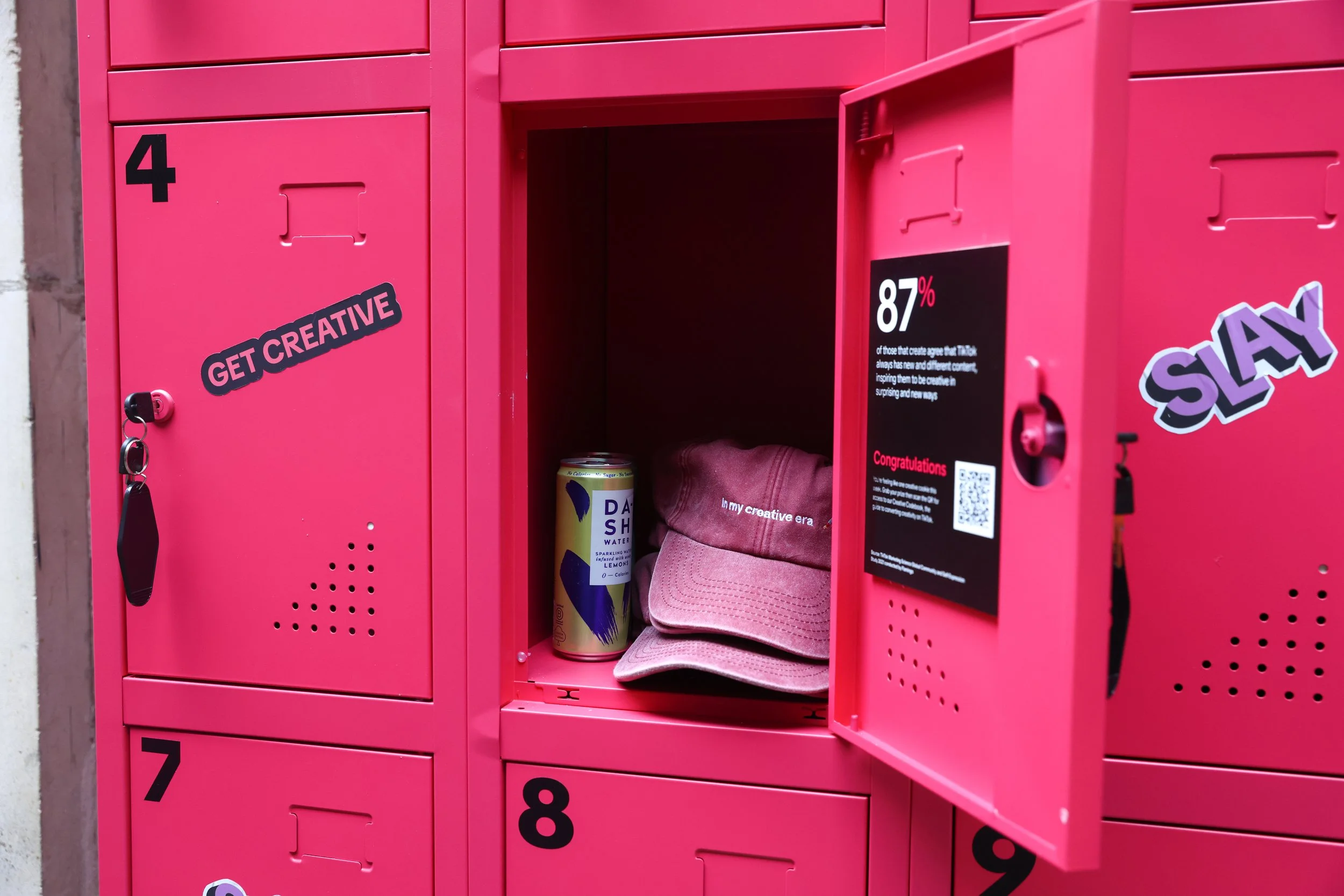
TikTok at Advertising Week Europe showed another side of brand activation: participation built into a sponsorship environment. Rather than relying on branding alone, the activation used interactive touchpoints like a custom kiosk, a Q&A game, scratchcards, branded lockers, and newsletter sign-ups to get people actively involved.
This is a good reminder that activation does not always need to be immersive in the full environmental sense. Sometimes the job is to create a set of smaller, well-placed interactions that make the brand feel present, useful, and memorable within a larger event.

Long Beach Pride Festival
A pride festival that upped the ante through immersive experiences, Long Beach Pride beautifully demonstrates the impact of brand activation at a broader public and cultural level. The event combined entertainment, storytelling, participation, and community in a way that gave people multiple ways to connect with the event and the brand behind it. Features like the drag makeup station, Voices Wall, concerts, and Silent Disco Dome created real points of interaction rather than just passive event attendance.
Brand activations at festivals also prove that activation is not limited to selling a product. It can just as easily be used to build affinity, create emotional connection, and shape how people experience a place, platform, or community event.
How to Plan a Brand Activation
Planning a brand activation usually gets easier once you stop starting with the format. A pop-up, launch event, sponsorship activation, or immersive experience might all be right, but the better place to begin is with the job the activation needs to do.
Define the objective:Start with the outcome. Are you trying to build awareness, support a launch, drive trial, shift perception, or create better engagement with a specific audience?
Understand the audience and context:Think about who you want to reach and where the interaction should happen. A festival crowd, retail audience, conference attendee, or invited client group will all respond differently.
Choose the right activation type and strategy:This is where format comes in. The right answer might be a pop-up, a trade show experience, sampling, a sponsorship activation, or something more immersive, depending on the brief.
Design the experience around participation:The audience should have something clear to do, notice, try, or respond to. That is usually what makes the brand easier to remember afterwards.
Measure it against the real goal:Footfall and impressions can be useful, but they are not the whole story. Look at whether the activation actually improved awareness, understanding, engagement, recall, or conversion.
Why Use a Brand Activation Agency?
The best brand activations don’t see a strong ROI just because the set looked good or the venue was full. They truly work because someone has thought carefully about what the audience needs to notice, do, feel, and remember, then built the whole experience around that.
That is what a strong experiential marketing agency brings to the table. They help shape the work so it is not just present, but purposeful. In practice, that usually means:
Sharper thinking at the brief stage
Better choices on format, interaction, and audience journey
Stronger links between the brand message and the live experience
Fewer gaps between the idea and the execution
More value from the activation once everything is live
The real difference is that the experience lands more clearly. People understand what the brand is trying to say, they have a better way into it, and the activation feels like it was built to do something specific rather than just fill a space.
Activate Your Brand with Cogs & Marvel
If you are putting time and budget into a brand activation, it helps to work with a team that knows how to make the experience count once people are in the room. At Cogs & Marvel, we create activations that are built to engage audiences properly, communicate the brand clearly, and deliver results that hold up after the event (see our case studies for proof).
If you want your brand activation to work as good as it looks, we’d love to talk.
FAQs
What is brand activation in marketing?
Brand activation in marketing is any campaign, event, or experience designed to create direct engagement between a brand and its audience. The goal is usually to make the brand more memorable, more tangible, or easier to connect with.
What are examples of brand activation?
Brand activation examples include pop-ups, product launches, sampling campaigns, trade show experiences, festival activations, sponsorship activations, immersive events, and digital interactive experiences.
Is brand activation only for new products or new brands?
No. Brand activation can be used for launches, but it is also used to build awareness, support sponsorships, shift brand perception, reconnect with existing audiences, and bring more established brands into new contexts.
What is the difference between brand activation and experiential marketing?
Experiential marketing is one part of brand activation. Brand activation is the broader category, while experiential marketing usually refers to the live, immersive, or participation-led side of it.
What does a brand activation agency do?
A brand activation agency develops and delivers experiences that help people engage directly with a brand. That can include strategy, creative development, production, event delivery, digital interaction, and audience journey planning.
What makes a brand activation successful?
A successful activation is clear on its purpose, well matched to the audience and context, and designed to create a meaningful interaction rather than just a visible one.
How do you measure brand activation?
Brand activation can be measured through a mix of metrics depending on the goal, including footfall, dwell time, trial, leads, engagement, content sharing, brand recall, perception shift, and commercial outcomes.