
Festival activations: Is it time to rethink the social media-first approach?
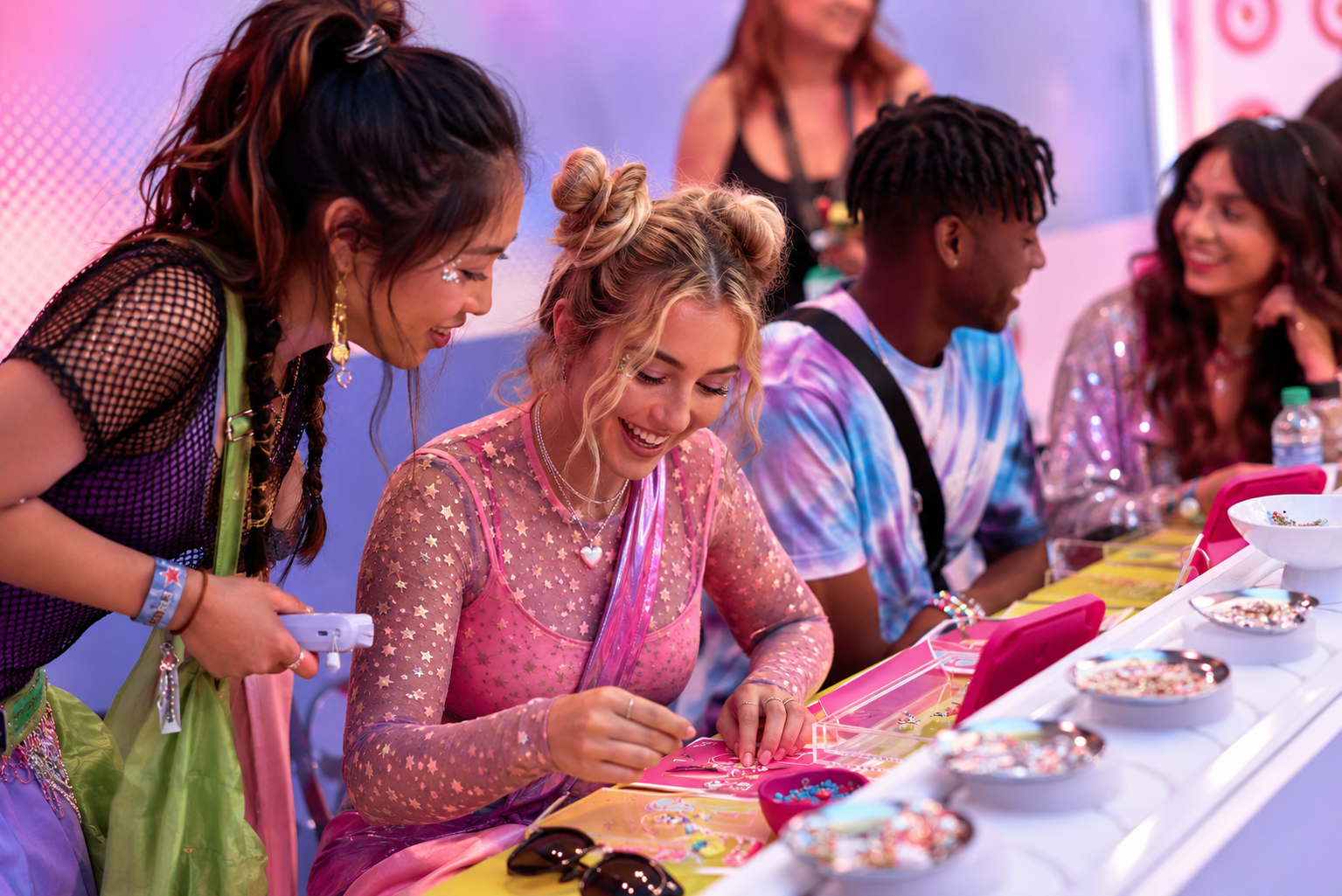
Pinterest’s phone-free activation at Coachella 2026
It may be time for brands to rethink the social-first approach to festival activations. While social capture and amplification have dominated experiential strategy for more than a decade, audiences are becoming increasingly overwhelmed by digital noise, repetitive content mechanics and AI-generated media. That creates greater value for experiences that feel authentic, emotionally resonant and culturally meaningful in the real world. Pinterest’s recent phone-free activation at Coachella is a significant case study because it appears to have intentionally deprioritised social capture in favour of earned media, emotional connection and cultural relevance, challenging many of the assumptions that have shaped modern festival activations. The broader lesson is not to replicate the phone-free format, but to rethink the objective behind festival activations and what brands actually want audiences to feel, remember and say afterwards.
Table of Contents
Why is Pinterest’s phone-free activation such a significant experiential case study?
Could old-school marketing principles be making a comeback in festival activations?
Why would a brand prioritise earned media over social reach?
What are the opportunities for brands in live environments like festivals?
Why is Pinterest’s phone-free activation such a significant experiential case study?
Pinterest’s phone-free activation at Coachella is potentially an important case study because it could mark a turning point in how brands approach festival activations. While much of the broader industry discussion focuses on the phone-free format, the format itself is not the strategy. What makes the activation strategically significant is that Pinterest appears to have intentionally deprioritised social capture in favour of earned media. In a category where most festival activations are designed around visibility, posting and amplification, that represents a notable shift in thinking.
“Social media has created a world where ROI is easy to achieve as long as you get a lot of people taking photos and videos and posting it online. The reason Pinterest’s Coachella activation is getting so much attention on a simplistic level is it’s phone-free. And that is completely counterintuitive to how brands activate in festival type environments these days. I think the reason is that social isn’t their objective on this occasion. What they’re shooting for is earned media”
Once you step away from the objective of a social-first activation, it opens new creative avenues for experience design. Social-first thinking often pushes brands to forego meaning in favour of spectacle and Insta-worthy photo opps. By stepping outside of that model, brands can focus on crafting experiences that resonate on a deeper emotional level with their audience and build stronger brand associations, emotional resonance and deeper brand loyalty over time.
Could old-school marketing principles be making a comeback in festival activations?
To understand why Pinterest’s activation feels so disruptive, it helps to first look at how festival activations worked pre-social media. Reach was mostly limited to people physically present. If the idea was strong enough, it might generate some media coverage, but there was no built-in amplification layer.
That changed once social media introduced scale, visibility and measurable distribution. Activations became more shareable, more optimised for capture, and over time that became the default. Pinterest’s activation appears to step outside of that model and reintroduce the old-school focus on earned media, but within a modern ecosystem.
“You can look at Pinterest and say their presence at Coachella is incredibly groundbreaking. But in one sense, it’s actually reverting back to focusing on a channel that was the most prevalent one 20 years ago, albeit with a modern twist.”
Unlike pre-social media activations, Pinterest appears to have made an intentional decision to prioritise earned in a market where social media is dominant. The question is, why?
“Social sharing doesn’t appear to have been their objective on this occasion, as much as earned media was. We have to ask ourselves, why? Is there just too much noise these days for social to really have an impact anymore? Do other channels start to look more attractive again?”
That decision becomes even more interesting when viewed through the lens of Pinterest’s wider brand strategy and internal culture. The activation reflected a broader positioning around helping people move from online inspiration into real-world action, alongside a culture that appears willing to challenge default marketing assumptions. We explore that relationship between brand promise, organisational culture and bold decision-making in more detail in our companion article on Pinterest’s Coachella activation.
Why would a brand prioritise earned media over social reach?
To answer this question, the conversation needs to move beyond mechanics and into channel dynamics. Brands operate within a PESO model. Paid, earned, shared and owned channels should complement each other but in practice, shared media tends to dominate in festival activation strategy because it is immediate, visible and measurable. That creates a bias where festival activations can start to optimise for capture rather than meaning. The experience becomes something that needs to be photographed, rather than something that needs to be felt.
In contrast, earned media relies on people outside the brand deciding it’s worth talking about, making it less controllable but more credible. And in a market increasingly shaped by AI and automation, that credibility becomes more valuable.
“There is a growing fear amongst brands that social isn’t quite achieving what they want because audiences are getting jaded and overwhelmed by the volume of content that’s out there on social, particularly when it comes to content that’s generated by AI.”
Earned media no longer operates the way it did 20 years ago, when it was largely tied to traditional press. Today, journalists, creators, and thought leaders all act as distribution channels in their own right, allowing stories to move fluidly between media coverage, LinkedIn commentary, podcasts, newsletters and wider social discussion. In many ways, this feels less like a return to old-school earned media and more like an evolution to earned media 2.0.
That creates an important knock-on effect in Pinterest’s case. While most of Pinterest’s user base are consumers and the activation itself was consumer-facing, Pinterest is also an advertising platform. Much of the secondary discussion around the activation happened in professional marketing circles, particularly on LinkedIn. So although the activation deprioritised social capture within the experience itself, it still benefited from social distribution through earned conversation. And that conversation likely reached a very valuable commercial audience - the marketers and decision-makers responsible for advertising investment.
There’s also a compounding effect to consider. The concept of Earned Growth Rate (EGR), developed by Fred Reichheld creator of the Net Promotore Score, highlights the power of the connection between brand advocacy and business growth. Without getting too deep into the mechanics, EGR suggests that growth from customers returning, recommending, advocating or bringing others into the brand carries greater long-term value than growth that has to be continually bought.
In the context of festival activations, this is important because a strong live experience can create advocacy, memory and recommendation in a way that a social-first content mechanic may not. That does not make earned media a replacement for paid, shared or owned channels. It makes it a credibility layer that can strengthen the whole mix.
What are the opportunities for brands in live environments like festivals?
Social media and digital content have dominated culture for the past 20 years, but cultural movements are cyclical and countercultures inevitably emerge in response. You can already see that shift happening through growing skepticism around digital consumption, discussions around social media restrictions for younger audiences, and wider fatigue with online life.
Part of that shift is cultural, but part of it’s also overwhelm. The sheer volume of digital and AI-generated content flooding online spaces means even slight skepticism around online content creates a halo effect around experiential marketing. AI can generate endless digital outputs, but physical brand activations remain fundamentally different because they are lived rather than consumed, involving participation, emotion, atmosphere and memory in ways digital content can’t replicate.
“We do not yet have the tools to create artificial real world experiences. So the opportunity for brands is enormous. It’s effectively saying to them ‘what’s your one remaining channel where authenticity can’t be artificially generated?’ It’s brand activation.”
Festivals become particularly powerful in this context because they are emotionally heightened environments where people are already open to participation, identity expression and real-time cultural connection. That creates a very different psychological environment for brands than interruptive advertising does.
A strong festival activation can therefore become associated not just with the brand itself, but with the emotion, energy and cultural meaning surrounding the moment. And as audiences become increasingly overwhelmed by AI-generated content and digital noise, those real-world associations become more valuable. Recent research by Jumio found that 72% of consumers worldwide worry about being fooled by manipulated or AI-generated social media content, suggesting we may be entering a renaissance of in-real-life experiences, where physical presence, participation and authenticity carry substantial weight because they can’t be faked.
Key Takeaways
1. Start with the behavioural outcome, not the content output.
Before planning the activation, define what you actually want audiences to think, feel or do afterwards. Too many festival activations begin with social KPIs already locked in, which immediately narrows the creative territory. Instead of asking “How do we maximise reach and get people posting?”, start by asking:
What behaviour are we trying to encourage?
What emotional response are we trying to create?
What brand association should people leave with?
2. Audit whether your festival activation is optimised for memory or visibility.
There is a difference between experiences people briefly engage with and experiences they genuinely remember. Highly visible activations are not always the most effective at building long-term brand equity. Brands should pressure test activations against questions like:
Would this still work if nobody posted it?
Would people talk about this afterwards without prompting?
Does this create emotional recall or just temporary attention?
If the activation only works through a phone camera, the experience itself may not be strong enough.
3. Treat earned media as a strategic layer
Most brands still treat earned media as something nice to have once the activation launches. Pinterest’s approach suggests earned conversation can instead become the strategic centre of the campaign. That requires designing ideas with genuine discussion value that:
challenge conventions
tap into cultural tensions
create a clear point of view
give journalists and thought leaders something meaningful to analyse
The goal should extend beyond exposure to include relevance within wider cultural and industry conversations.
4. Build festival activations around cultural tension
Pinterest went beyond participating in festival culture to tap into a wider tension people are increasingly feeling between digital life and real life. That is often where the strongest experiential ideas and opportunities lie. Brands should look beyond surface-level trends and identify:
frustrations audiences are feeling
behaviours audiences are questioning
cultural shifts beginning to emerge
norms people may be starting to reject
5. Design for the right audience, not just the obvious audience.
One of the more interesting aspects of Pinterest’s activation is that the secondary audience may have been just as important as the festival audience itself. The earned discussion around the campaign reached strategists, marketers and decision-makers across LinkedIn, newsletters and podcasts. For Pinterest, which also operates as an advertising platform, that audience carries significant commercial value. Brands should think more carefully about:
who experiences the activation directly
who encounters it through earned discussion
who influences wider perception afterwards
Sometimes the most commercially valuable audience is not physically present at the activation itself.
6. Reconsider how success should be measured.
If every activation is measured against the same engagement metrics, brands will continue producing increasingly similar work. KPIs should support the objective, not dictate it. Depending on the activation, success may look more like:
earned media quality
share of conversation
audience sentiment
brand association shifts
advocacy
repeat engagement
organic recommendation
community participation
7. Use experiential to deliver what digital can’t.
As AI-generated content floods digital channels, audiences are becoming more skeptical of what they see online. That increases the value of experiences that feel lived, emotionally real and culturally grounded. Experiential is becoming one of the few channels where brands can create moments people trust because they experienced them firsthand.
How does Cogs & Marvel bring ambitious festival activation ideas to life?
At Cogs & Marvel, the effectiveness of our work comes from the creativity. Our teams execute exceptionally well but it's our ideas and our designs that really move the needle on how effective an experience is. We don’t believe in approaching briefs with rigid assumptions around what should always be measured or what every activation should look like. Every project is a blank canvas. We spend time actively listening to our clients, understanding the real challenges they’re facing and having open, honest conversations about what success actually looks like. From there, the focus becomes finding the most ambitious and effective way to solve that challenge.
“I’ve got such admiration and love for our creative team because they’re so egoless. They’re really interested in the brands we work with. They love learning about them. They love learning about the audiences those brands want to talk to. They’re always coming at it from the perspective of, what’s the most ambitious we can be? How can we be most effective without the preconceptions?”
FAQ
-
Successful festival activations are no longer defined purely by social reach or content volume. Audiences are becoming increasingly overwhelmed by digital noise, polished brand content and AI-generated media, which means experiences that feel authentic, emotionally engaging and culturally relevant are becoming more valuable. The strongest activations create memory, advocacy and conversation rather than just visibility. That often means focusing less on spectacle for the sake of content capture and more on how audiences feel during and after the experience.
-
For years, festival activations were heavily optimised around social sharing because social platforms offered scale, visibility and measurable engagement. But that model is starting to show limitations. Audiences are becoming more selective about what they engage with, while the volume of content online continues to increase. Pinterest’s Coachella activation reflects a broader shift where some brands are starting to prioritise earned media, emotional resonance and cultural relevance over pure social amplification. The lesson is not that social media no longer matters, but that it should not automatically dictate the creative strategy.
-
Earned media carries a level of credibility that branded content often struggles to achieve because it depends on other people deciding the experience is worth talking about. In today’s media environment, earned media also extends far beyond traditional press coverage. A strong activation can move through LinkedIn discussions, podcasts, newsletters, creator commentary and wider industry conversations. That creates a multiplier effect where the activation reaches audiences well beyond the people physically attending the event. In many cases, those secondary audiences can be commercially more valuable than the live audience itself.
-
Brands should measure festival activations against the strategic objective rather than defaulting to the same engagement metrics used across every marketing channel. Social impressions and content reach may still matter, but they are not always the best indicators of long-term impact. Depending on the objective, more valuable measures may include earned media quality, audience sentiment, brand association shifts, advocacy, repeat engagement, organic recommendation and share of conversation. The key is making sure the KPIs support the intended behavioural or emotional outcome rather than narrowing the creative territory from the outset.
-
Cogs & Marvel approaches festival activations as strategic brand experiences rather than templated event executions. The process starts with understanding the brand, the audience and the real business challenge before deciding what the activation should look like or how it should be measured. Rather than defaulting to assumptions around social-first performance, the focus is on identifying the most ambitious and effective creative solution for the objective at hand. That includes helping brands identify cultural tensions, rethink audience engagement, create experiences with genuine discussion value and design activations that build emotional connection, memory and long-term brand relevance.