Immersive Marketing at GAMESCOM 2026: My Creative Side Quest
Six things I learned from two days inside gaming’s biggest IRL event!
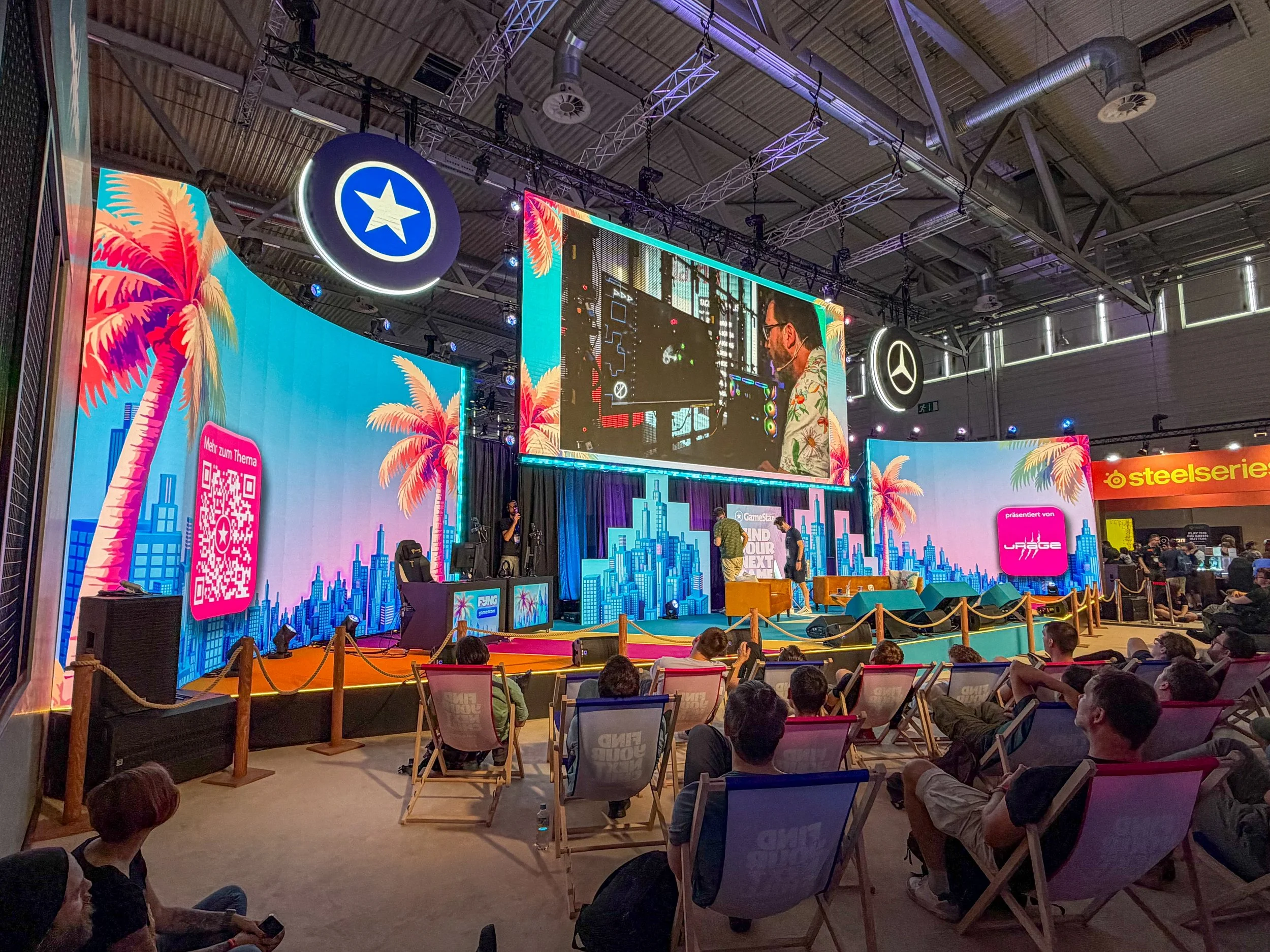
Somewhere between the big worlds, the fandom and the organised chaos, Gamescom 2026 offered a pretty brilliant look at what happens when immersive marketing taps into fan culture at full power. Gaming events like this are shaped as much by shared behaviours, rituals and obsessions as they are by the games themselves. But to understand what makes any of that work, you first have to understand what it actually feels like to be there.
Gamescom is not subtle. It’s loud, it’s huge, and occasionally it can be overwhelming. Speaking truthfully, it’s a little bit bonkers… and that’s why I loved it! I spent almost two days walking the Koelnmesse halls in Cologne, taking in as much as I possibly could and clocking more steps than I care to think about. I wasn’t there to play games. If anything, I was there wearing my experiential hat, looking at how immersive marketing comes to life when one of the world’s biggest gaming communities ends up in one place.
As part of my creative side quest, I wanted to come away with some talking points, here are the six things I unlocked at Gamescom 2026.
1. From URL to IRL: Bringing Game Worlds to Life
The best setups didn’t feel like you were stepping on to a stand. They felt like little pieces of the game itself had somehow escaped the screen and made their way to the show floor.
That transformation from digital world to physical world was everywhere. Not every setup was able to pull that off, but some environments were designed so well that fans could literally step into something they already knew.
FC27’s “The Grounds” was a great example. The whole space felt like a real town district with a target practice mini pitch at its centre. Culturally it was spot on! Just like in the game itself, there were different stores surrounding the central pitch for you to explore. There was a ‘Scissor Kick’ barber shop, a ‘Marked Up’ tattoo parlour, and even a locker room photo-op experience called ‘Finesse Shots’ where you were able to pose with a winning trophy after a game (just like the pros do).

2. Unspoken Community: Fan Culture in Action
At Gamescom there is this wonderful sense of community embedded deep within the people that go. There were times where you could see this manifesting right in front of you, and none of it felt forced.
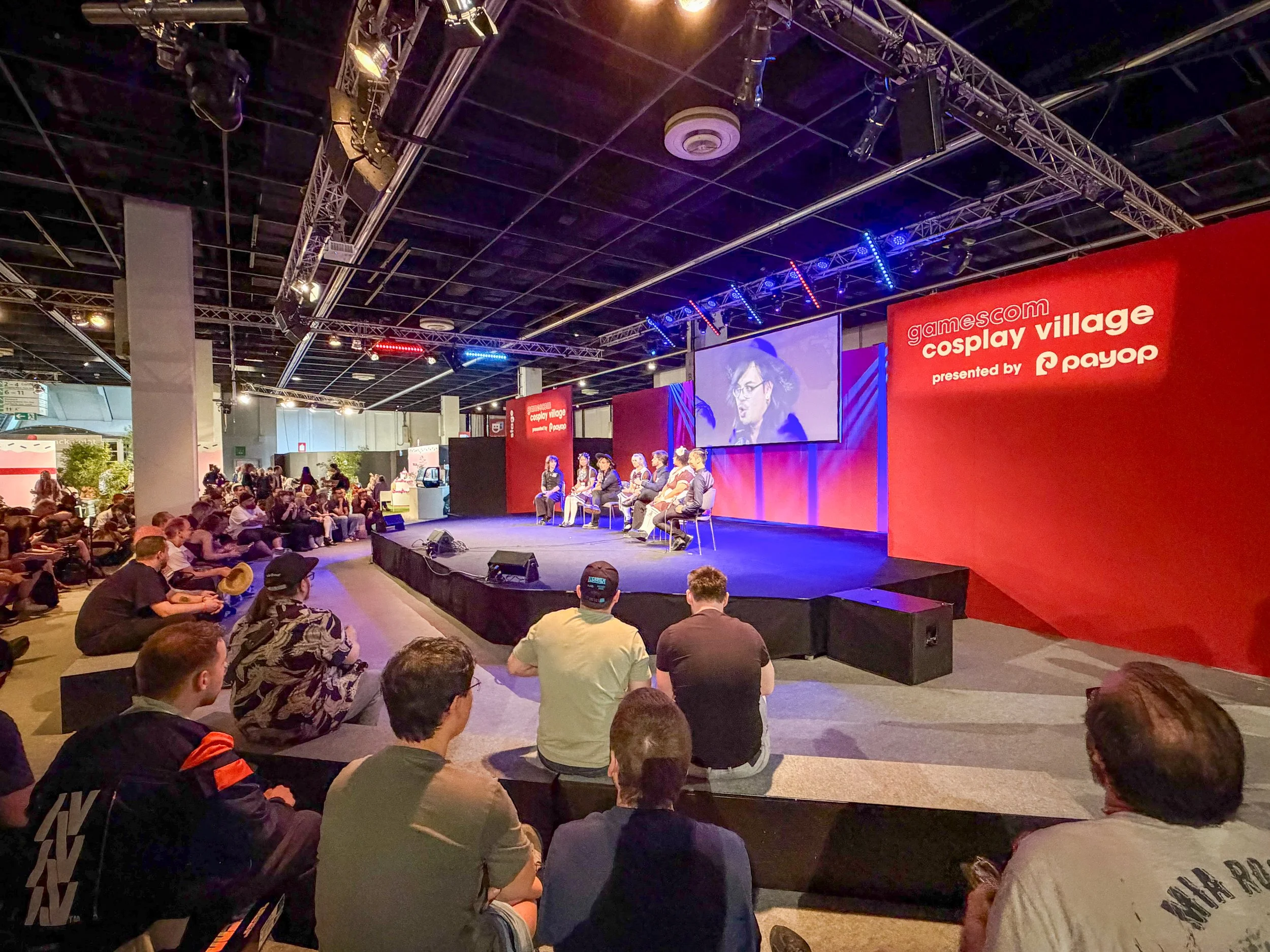
Apart from witnessing this on the odd occasion walking round, the place where community comes into itself is within the Cosplay village. The effort people put into making their own costumes was incredible, but what interested me more was everything that happened around them.
People stopped Cosplayers for selfies. Kids were asking for autographs. Repair stations were on hand to help anyone who needed a quick tip or fix. Fans not only built their own costumes but also built their own environments and displays to welcome people in. Artists, makers, and gamers all seemed to blur into one shared community. There was no overarching Gamescom message telling everybody to connect. They just did.
We spend a lot of time in experiential talking about community, when sometimes the best move is to simply create the conditions for an existing community to thrive and express itself. The Cosplay Village didn’t manufacture fandom, it gave fan culture somewhere to show up!
3. Beyond Gameplay: Interactive Brand Experiences
Having the opportunity to play the next big thing is high up on every Gamescom ticket-goers list. Big screens, dynamic lighting, official soundtracks, it’s all part of the show… As you walk around you start to see the Gamescom exhibitor starter pack in full effect. I’m talking gaming stations, big overhead signage, character sculptures, photo-ops... None of which are bad things. Far from it. They’re repeated because they work (and probably have done for 15 years). But with so many exhibitors working from the same playbook, the spaces that really stood out were the ones that found ways to push beyond gameplay and create more interactive brand experiences.
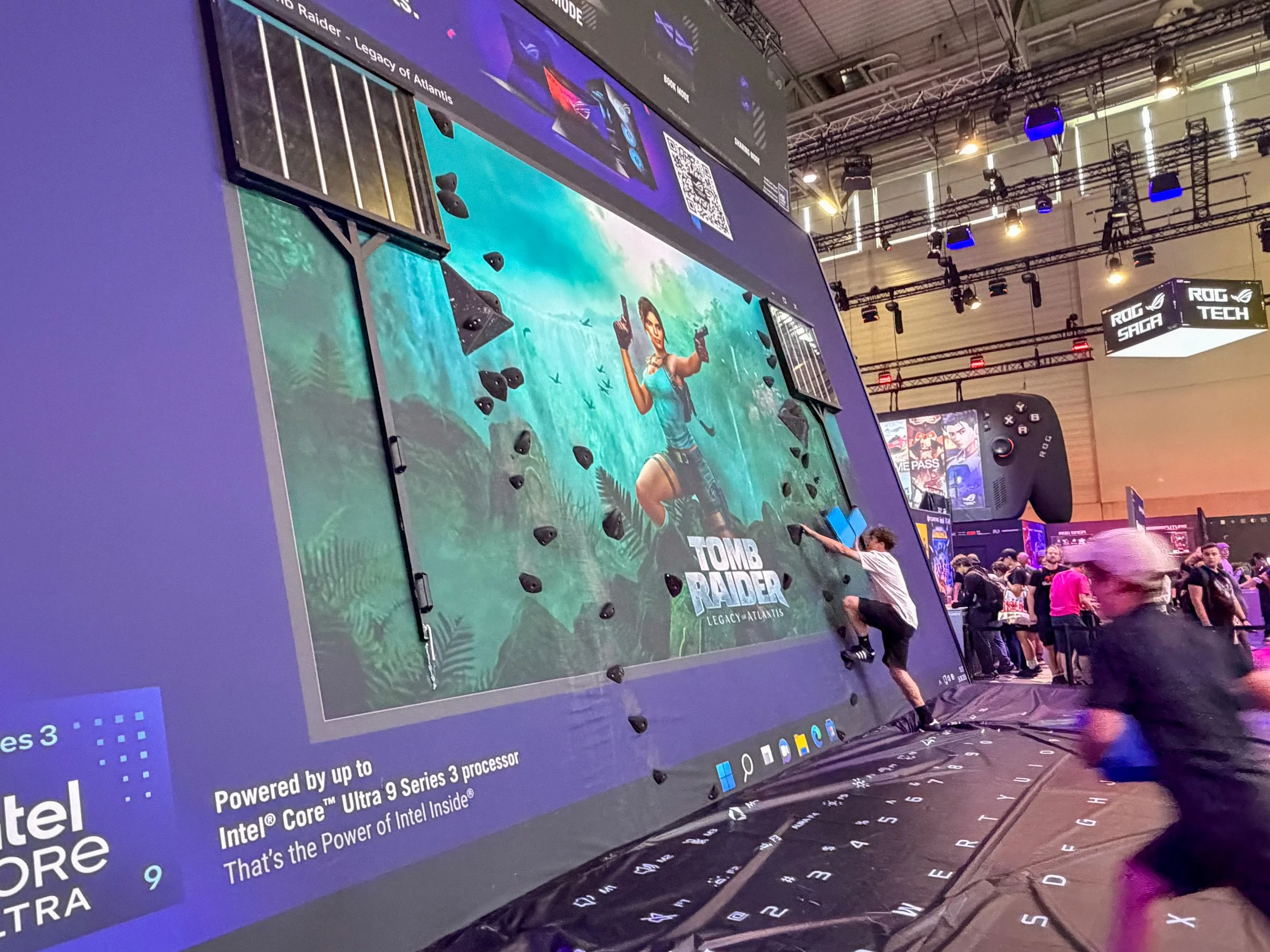
SEGA built an immersive experience on-stand. Arc Raiders combined live performance with mixed reality. Tomb Raider even turned a climbing wall into a live spectator challenge. The most effective spaces found ways to take gameplay to the next level by putting experiential first.
Even the humble stamp was having a bit of a renaissance. Google Play used a stamp quest to help move people through different parts of their space. SEGA went one step further with a clever passport initiative where visitors were encouraged to collect stamps to receive an exclusive, limited edition SEGA coin. In a way, visitors were playing a mini game not too dissimilar to some of the classics out there. It was a simple example of gamification at events, but one that gave people a reason to keep exploring.
At an event where there’s screens-a-plenty, gameplay isn’t simply just sitting there with a controller in your hands anymore. It’s more than that.
4. Access All Areas: Designing More Accessible Gaming Events
One of the most impressive things I witnessed at Gamescom was how much thought had been put into accessibility and neurodiversity. I saw wide aisles, ramps, staff actively helping wheelchair users move through experiences. It really felt considered.
Across years working around events in tech and entertainment, I can’t remember seeing wheelchair users represented so visibly across a live show floor. Seeing brands take these types of things seriously was great to see. Accessibility in design will always perform at its best when it isn't treated like a bolt-on.
Even Gamescom as an event organiser has accessibility embedded within its wider visitor planning, including barrier-free access information and wheelchair services. Exhibitors were given expanded accessibility guidelines for Gamescom 2026 and you could see it all in action with accessible waiting lines and game stations along with chill-out spaces and quiet zones built into environments for people who need a break from the chaotic nature of the event.
5. Patience is a Virtue: Rethinking Gaming Booth Design
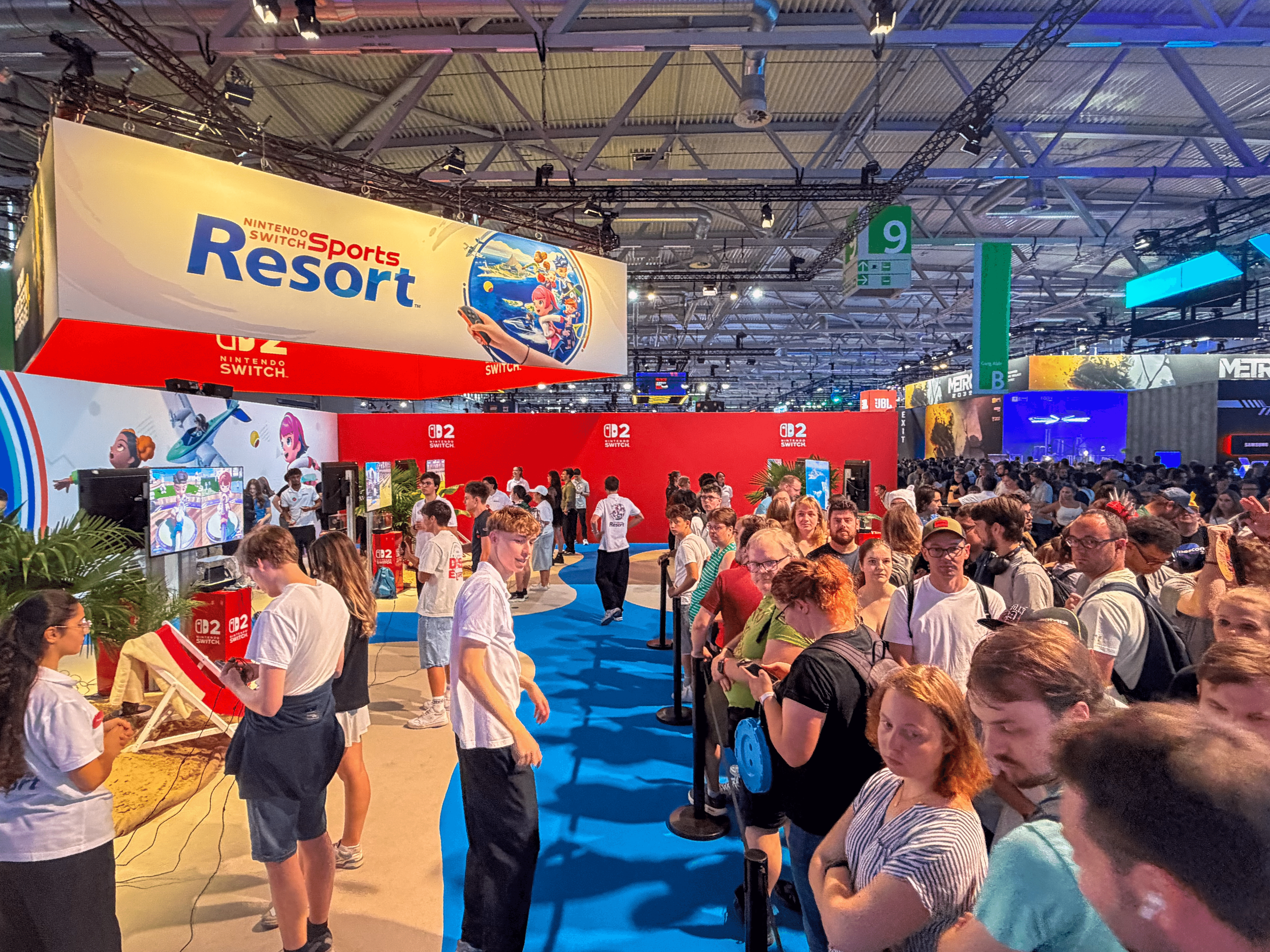
I’ve never seen people queue like gamers queue! Three hours. Four hours. In some cases, more than five. And they came prepared. Camping chairs, fold-out stools. Snacks. Handheld consoles. The whole works.
What fascinated me the most was the value attached to being among the first people to play something. Some people were waiting for a brand new release, others were waiting for the opportunity to play an expansion pack on a much-loved game that came out two years ago. Some would even queue for 45 minutes to play a game that’s been around for decades. Whatever their reasons, the wait itself seemed to prove how desirable the experience was going to be.
From a gaming booth design POV, this is huge. Queueing simply wasn’t an afterthought; on some stands it looked like it swallowed a third of the footprint. To design a stand at Gamescom you have to take this seriously. Yet surprisingly few brands appeared to turn that waiting time into much of an experience. For me, that feels like one of the biggest creative opportunities. If someone is willing to give you three hours before they even reach the experience, that time shouldn’t just be dead space.
6. OutSTANDing Spaces at Gamescom 2026
As my creative quest comes to a close, there are a few honourable mentions that really stuck with me.
Tomb Raider: Spectacle Meets Participation
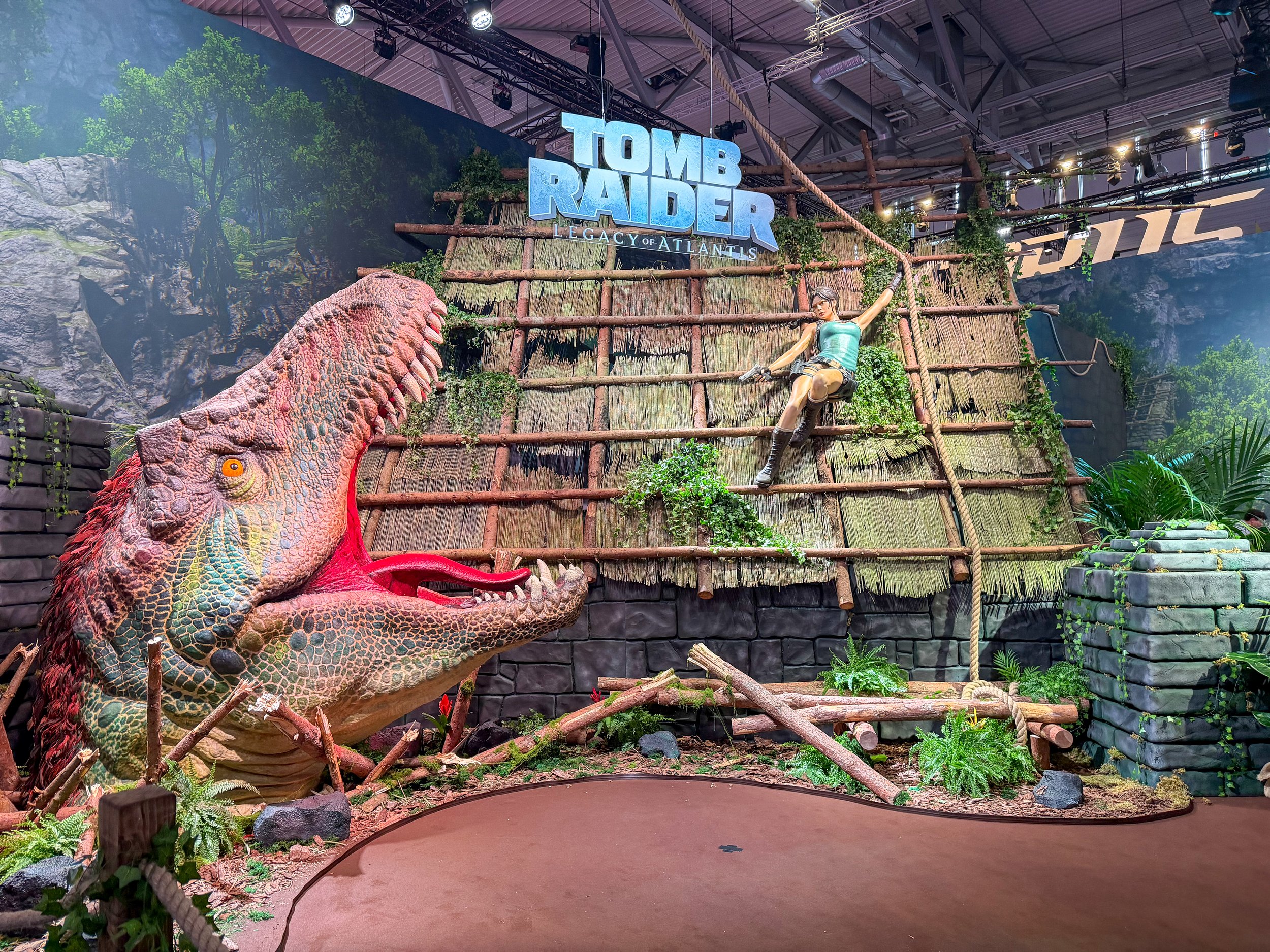
Tomb Raider: Legacy of Atlantis was a pure spectacle. The huge Lara Croft and T-Rex scenic moment was impossible to ignore, but adding live climbing-wall competitions gave it more value within the hall. It certainly stopped me in my tracks.
Love and Deepspace: Bringing Fan Culture Centre Stage
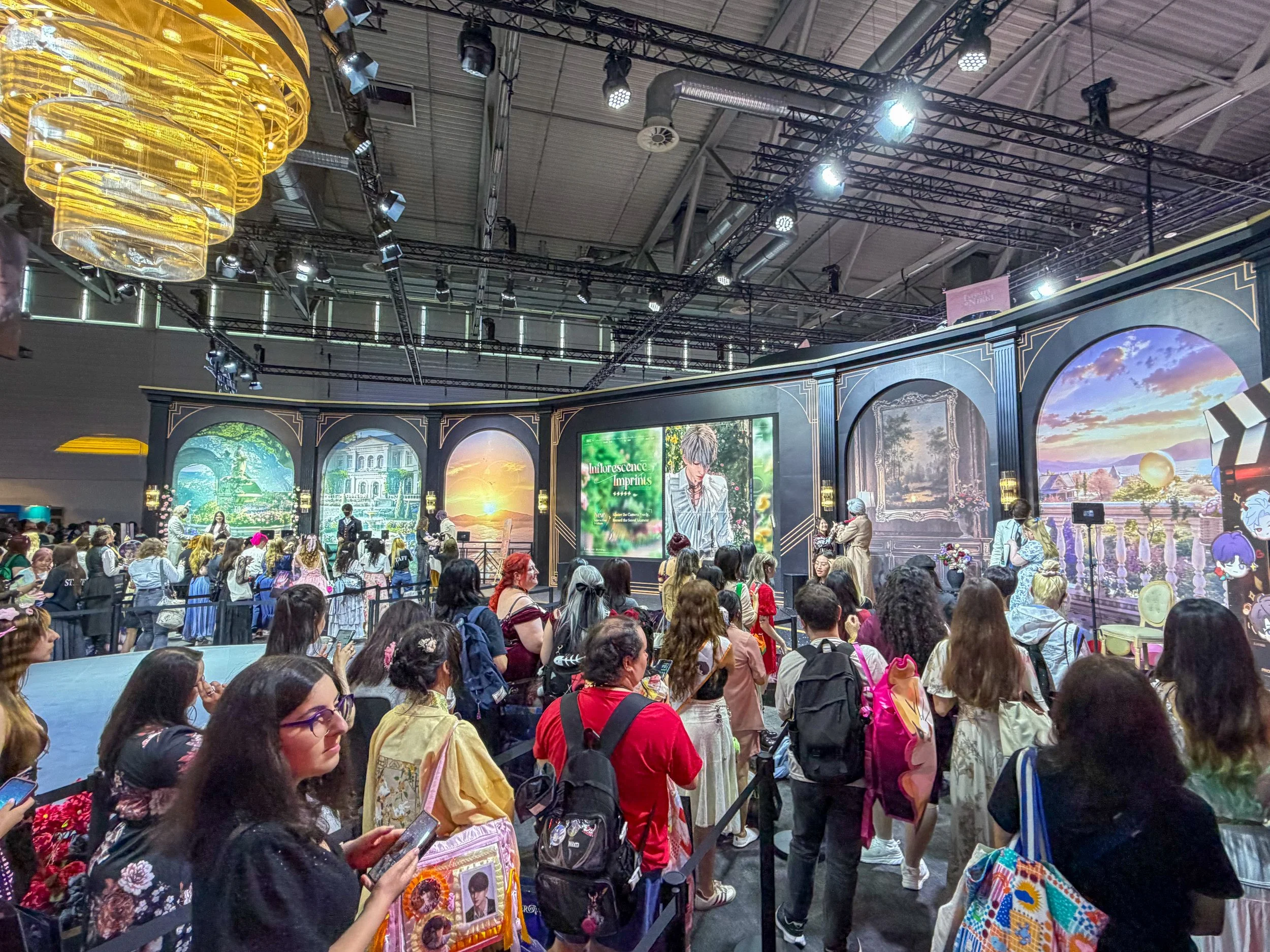
Love and Deepspace was a real eye-opener. Its open stage environment caused quite a scene. Multiple character archways with cosplay performers meeting fans one-to-one. I’ll admit, I won’t be racing to secure this dating simulator game but I can certainly appreciate the buzz it created.
SEGA: Building a Gamers’ Paradise
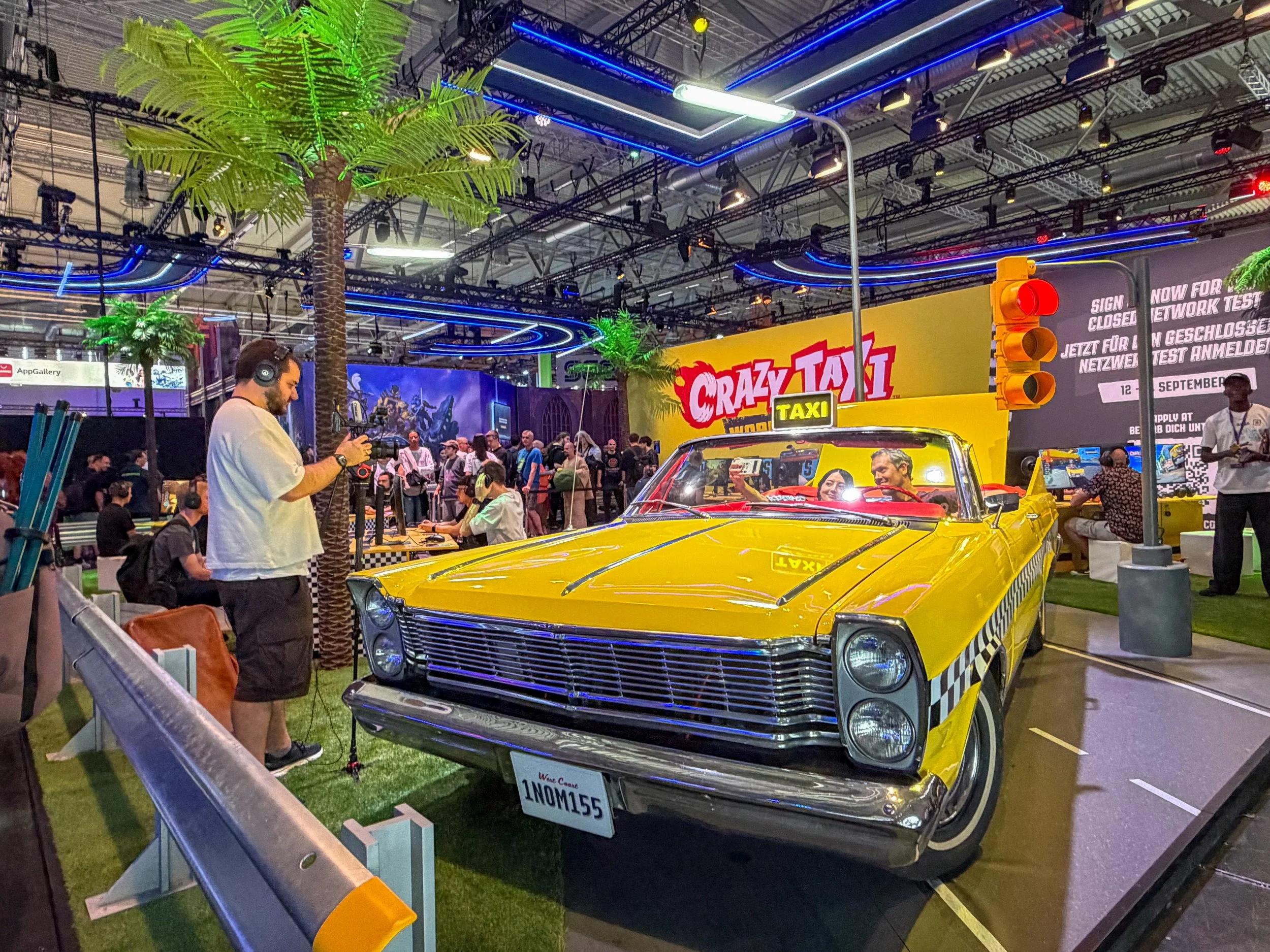
SEGA felt like one of the most complete spaces at the show. Multiple worlds, gameplay, photo moments, meet-and-greets. It also had one of my favourite arcade games from way back when; Crazy Taxi which I can’t wait to play once more when it’s officially released in 2027.
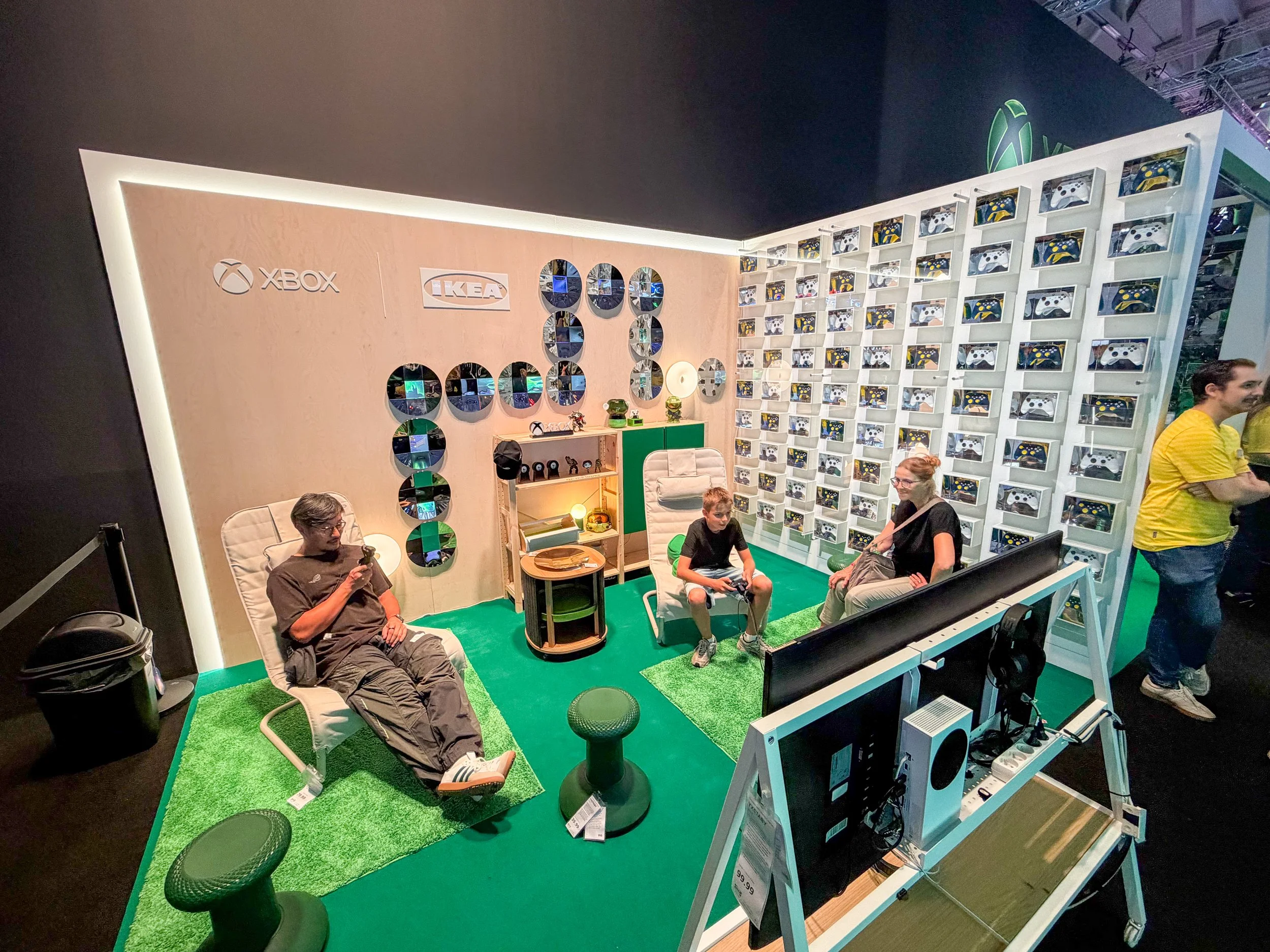
Xbox x IKEA: Designing for Calm
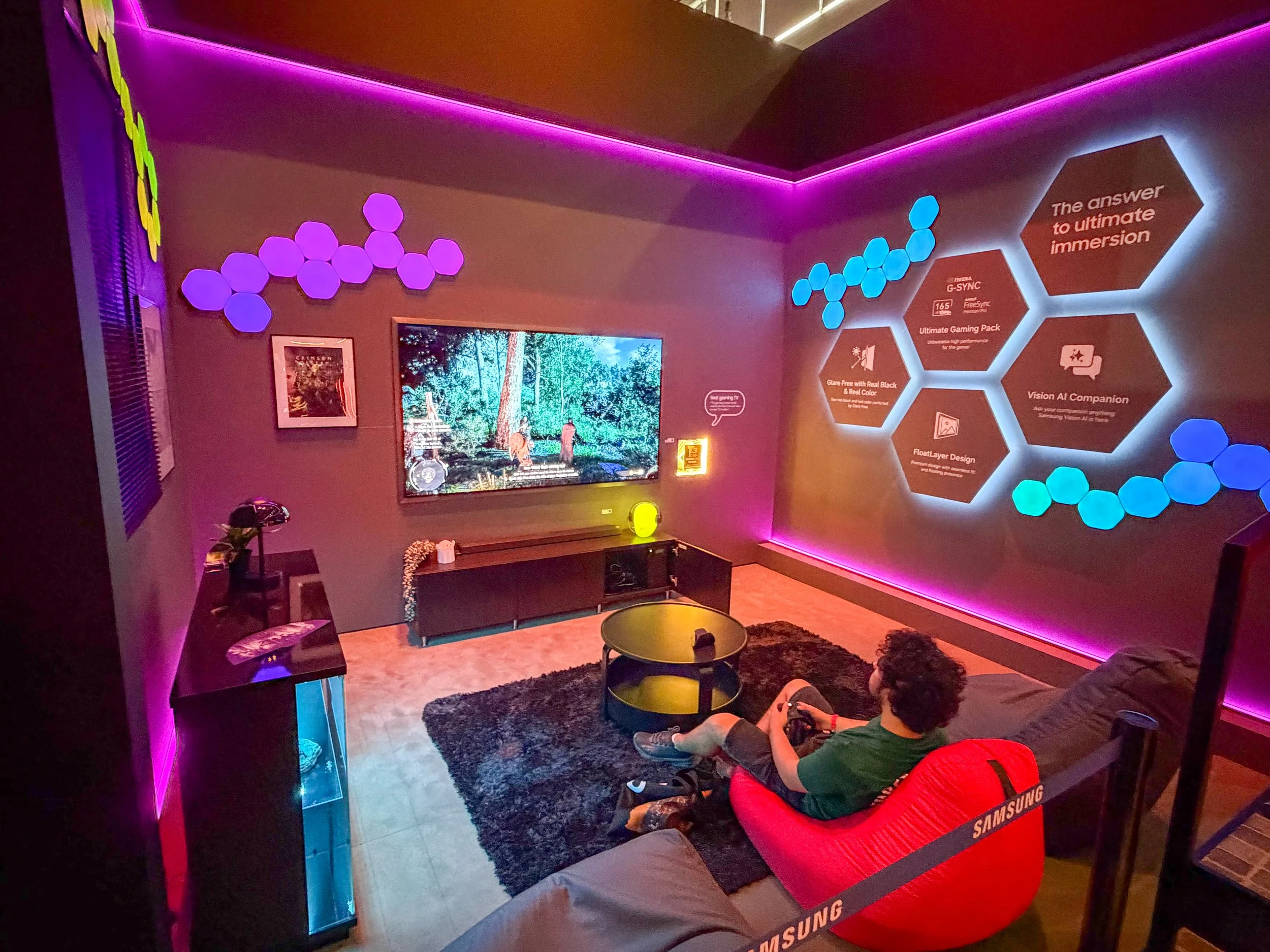
The XBOX x IKEA collab was smart for almost the opposite reason. Their new nine-piece YXSTABY collection was placed into a relaxing, home-like gaming environment which meant the collab felt natural rather than forced. A calming space in a hall full of sensory overload.
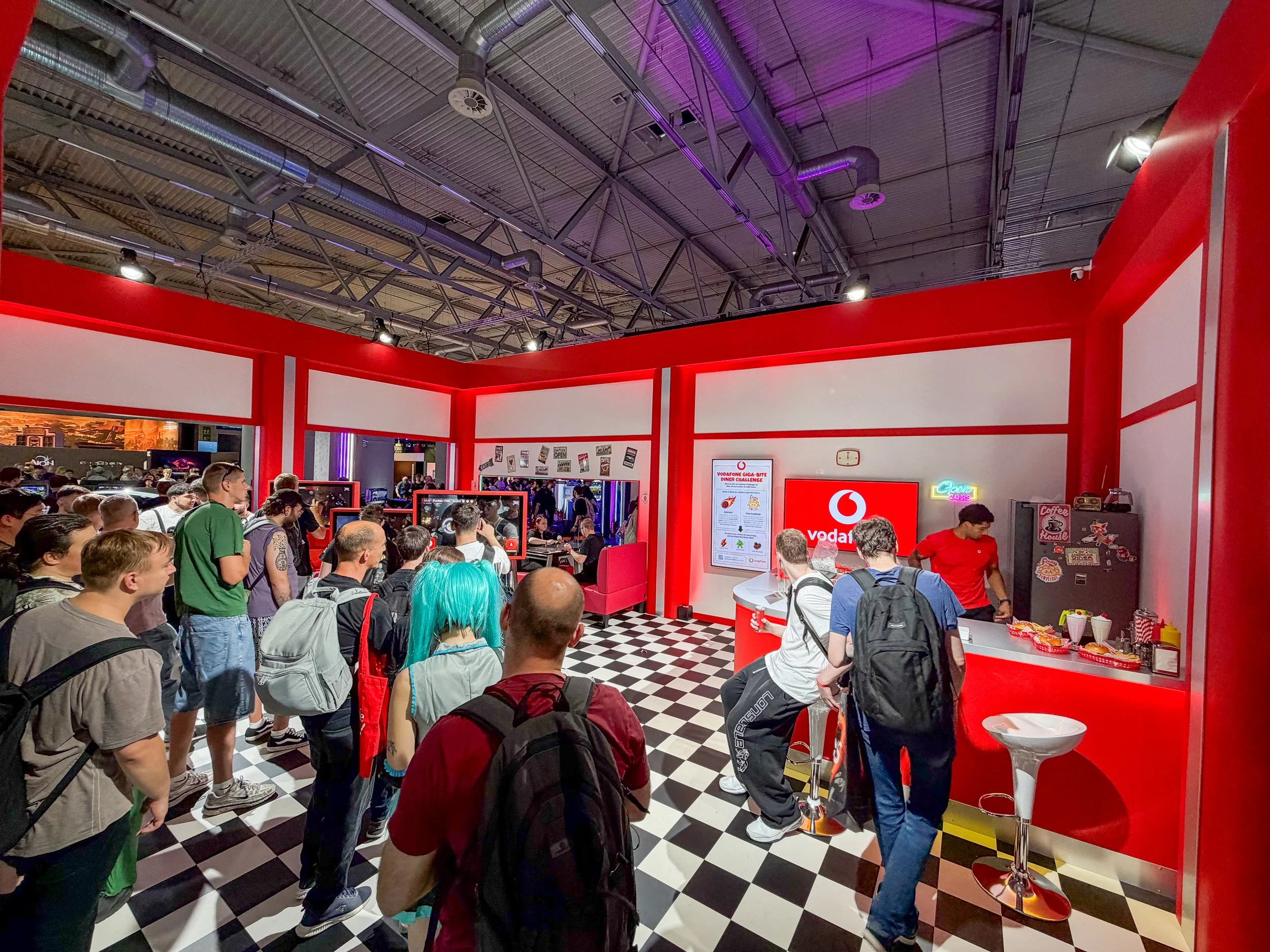
Vodafone: Turning Connectivity into a Brand Experience
Vodafone’s Giga-Bite Diner also stood out because it somehow took 5G connectivity and wrapped it in this super-interesting all-American diner environment. Vodafone used their space to host indie creators in a hall where big entertainment rules roost: a welcomed change of pace.
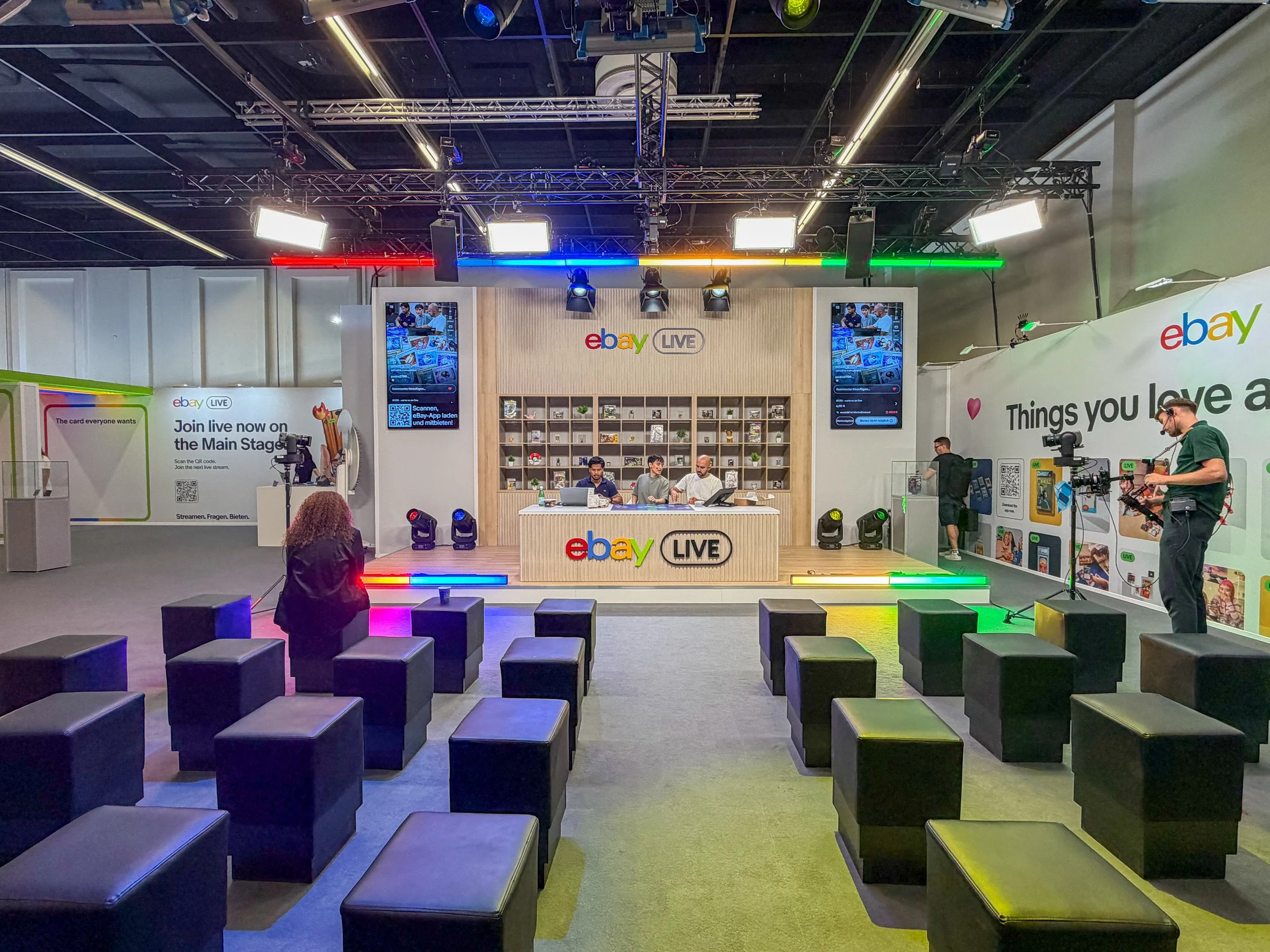
eBay Live: Turning Commerce into Entertainment
And finally, eBay Live turned the buying and selling of collectibles into live entertainment. Sellers could display their unwanted items and eBay would sell them as part of a live auction segment on-stand not only to the people in the room but also online. It was great to see!
End Credits: Designing for Gaming Audiences
Gamescom isn’t just any old event, it’s gaming culture played out in real life. It’s a race to be first, a treasure hunt for something new, a nostalgia trip, and above all, it’s one massive multiplayer world we all get to run riot in!
The best gaming events understand that gaming audiences don’t need convincing to care. They turn up already switched on. They’ll quite happily queue for hours on end, build incredible costumes, hunt down every last stamp, discover new worlds and happily lose themselves in the ones they already love.
The opportunity for brands is to take all of that energy and give it somewhere to go!
Build worlds worth stepping into. Create spaces that people will actually want to explore. Give communities the room to just be themselves. Make the wait worth waiting for.
Gamescom was a blast. I went to Cologne looking for creative inspiration and I found it in abundance. And with that, my side quest is complete. I now get to go back to my day job with new-found energy of my own that I can put into play on the next brief. I might even dig out my retro N64 for old times sake.
FAQs
-
Brands use immersive marketing at Gamescom by turning game worlds into physical environments that fans can enter, explore and participate in. The strongest examples at Gamescom 2026 combined scenic design, live performance, gameplay, photo moments, challenges and social interaction to make the experience feel like an extension of the game rather than a conventional exhibition stand.
-
The strongest experiences went beyond giving visitors access to a game. They created a broader reason to spend time in the space, whether through live challenges, mixed reality, cosplay interactions, collectible rewards or environments that recreated part of the game world. The best examples gave fans something to do, discover or share.
-
At Gamescom, fans were often willing to wait for hours to access popular experiences, which makes queue design a significant part of the visitor journey. Rather than treating this time as dead space, brands can use it for entertainment, storytelling, previews, social interaction, rewards or smaller participation moments that build anticipation before the main experience.
-
At Gamescom, fans were often willing to wait for hours to access popular experiences, which makes queue design a significant part of the visitor journey. Rather than treating this time as dead space, brands can use it for entertainment, storytelling, previews, social interaction, rewards or smaller participation moments that build anticipation before the main experience.
-
Simple game mechanics can encourage visitors to explore more of a space and spend longer engaging with it. At Gamescom 2026, Google Play used a stamp quest and SEGA used a passport system that rewarded visitors for completing activities across the stand. The mechanic was simple, but it gave people a clear reason to keep moving through the experience.
-
Many of the strongest ideas at Gamescom are transferable because they are based on audience behaviour rather than gaming alone. Festivals, sponsorship activations, sports events, entertainment launches and technology events can all use similar principles by creating participatory environments, designing for community, adding live challenges, rewarding exploration and turning waiting time into part of the experience. The key is to adapt the mechanic to the audience rather than copy the execution.